Russell Archive Landing page
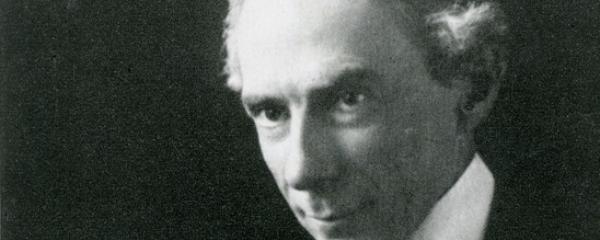
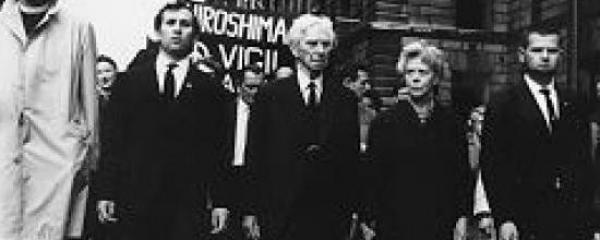
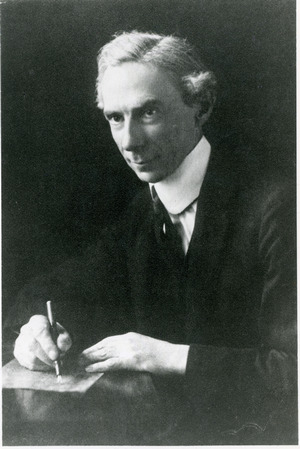 Bertrand Russell (1872-1970) was one of the foremost philosophers and public intellectuals of the 20th century. He contributed to a broad range of topics, from logic, epistemology, and the philosophy of mathematics to social and political thought. In particular, he was critical of many aspects of war, beginning with protests to the First World War and through to nuclear war, and the Vietnam War. It is many of these themes, especially those in which he championed "humanitarian ideals and freedom of thought" earned him the Nobel Prize for Literature in 1950.
Acquiring the Archives
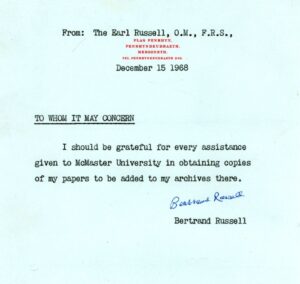
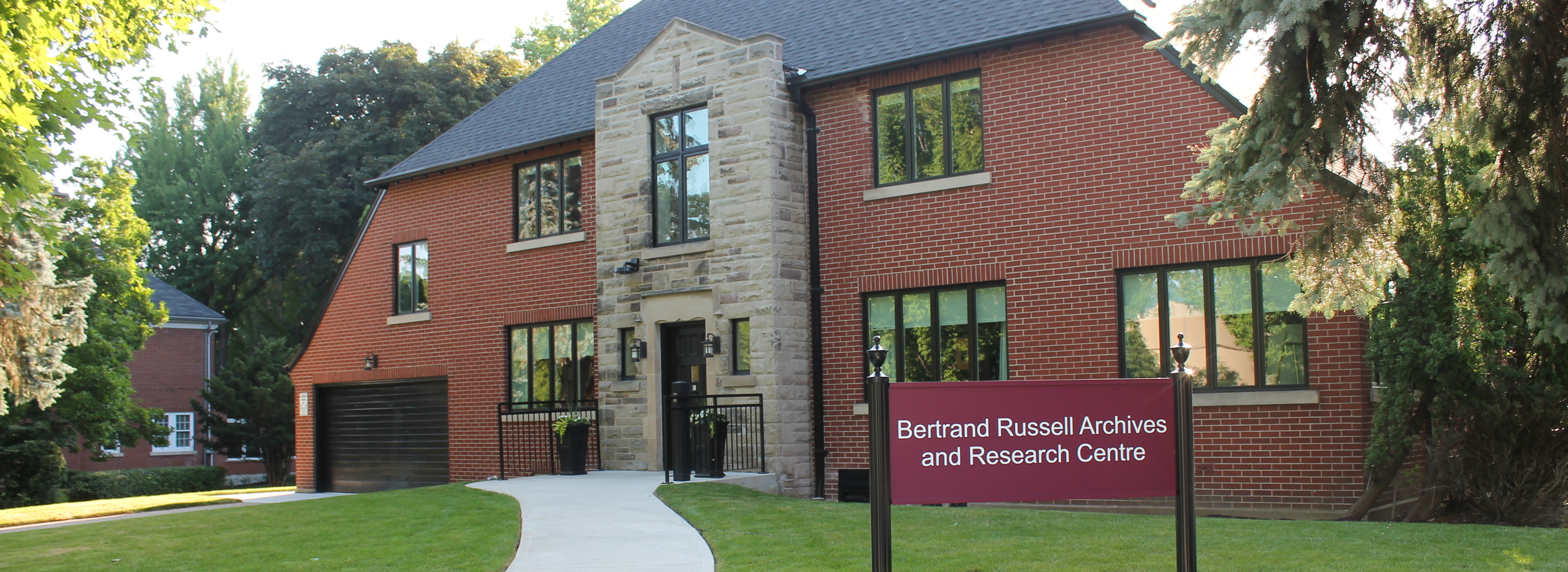
In 1968, through the determined efforts of University Librarian, William Ready, and the financial support of the Government of Canada, the Atkinson Charitable Foundation, the Laidlaw Foundation, and McMaster alumnus Cyrus Eaton, McMaster University purchased the Bertrand Russell Archives–the funds received were used to support Russell's Peace Foundation. At the time, the Archives was considered one of the finest personal archives in the world and brought McMaster widespread international attention. Since then, the Archives have continued to grow and now include over 1,000 boxes of letters, manuscripts, photographs, and other documents, as well as over 3,000 volumes from Russell's personal library, and hundreds of other publications.
 "Three passions, simple but overwhelmingly strong, have governed my life: the longing for love, the search for knowledge, and unbearable pity for the suffering of mankind."