February 19, 2027 04:00 PM to 05:30 PM
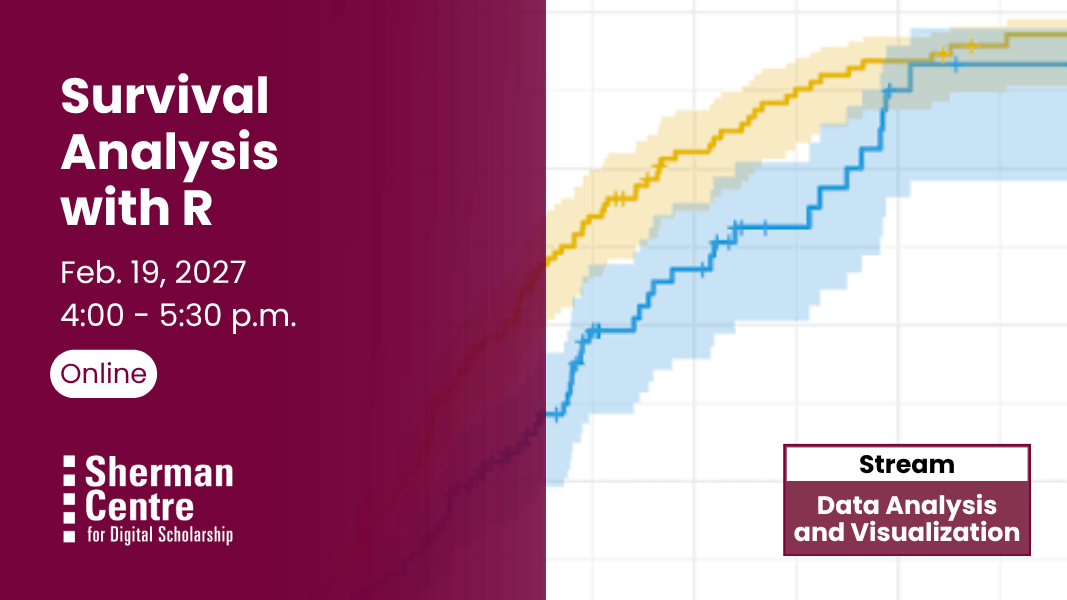
Many research questions in health, clinical, and epidemiological research focus not only on whether an event occurs, but also on when it occurs. Survival analysis provides a powerful set of statistical techniques for examining time-to-event outcomes such as mortality, disease recurrence, hospitalization, or recovery. Through live demonstrations and hands-on exercises in R, participants will gain practical experience analyzing and interpreting survival data using widely used survival analysis methods. This workshop introduces the fundamentals of survival analysis, including Kaplan-Meier survival curves, log-rank tests, and Cox proportional hazards regression. Participants will learn how to prepare time-to-event data, compare survival experiences across groups, and model factors associated with survival outcomes. Whether you are conducting clinical, epidemiological, or health services research, this session will provide a practical foundation for applying survival analysis techniques in R.
This session is ideal for researchers, graduate students, and analysts working with time-to-event data. Basic familiarity with R and introductory statistical concepts is recommended.
By the end of this session, participants will be able to:
- Prepare and manage time-to-event data for survival analysis in R.
- Estimate and interpret Kaplan-Meier survival curves.
- Compare survival distributions between groups using the log-rank test.
- Fit and interpret Cox proportional hazards regression models.
- Assess the proportional hazards assumption and perform model diagnostics.
- Create publication-ready tables, figures, and summaries to communicate survival analysis results effectively.
Details: Any preparatory work for the session can be found on its information page. This virtual workshop will be recorded and shared on the same page, and discoverable via the Sherman Centre's Online Learning Catalogue.
Certificate Eligibility: This workshop is eligible for the Sherman Centre's certificate program. For more information, visit scds.ca/certificate-program. It is also eligible for the Canadian Certificate for Digital Humanities. To learn more, visit ccdhhn.ca or contact scds@mcmaster.ca.