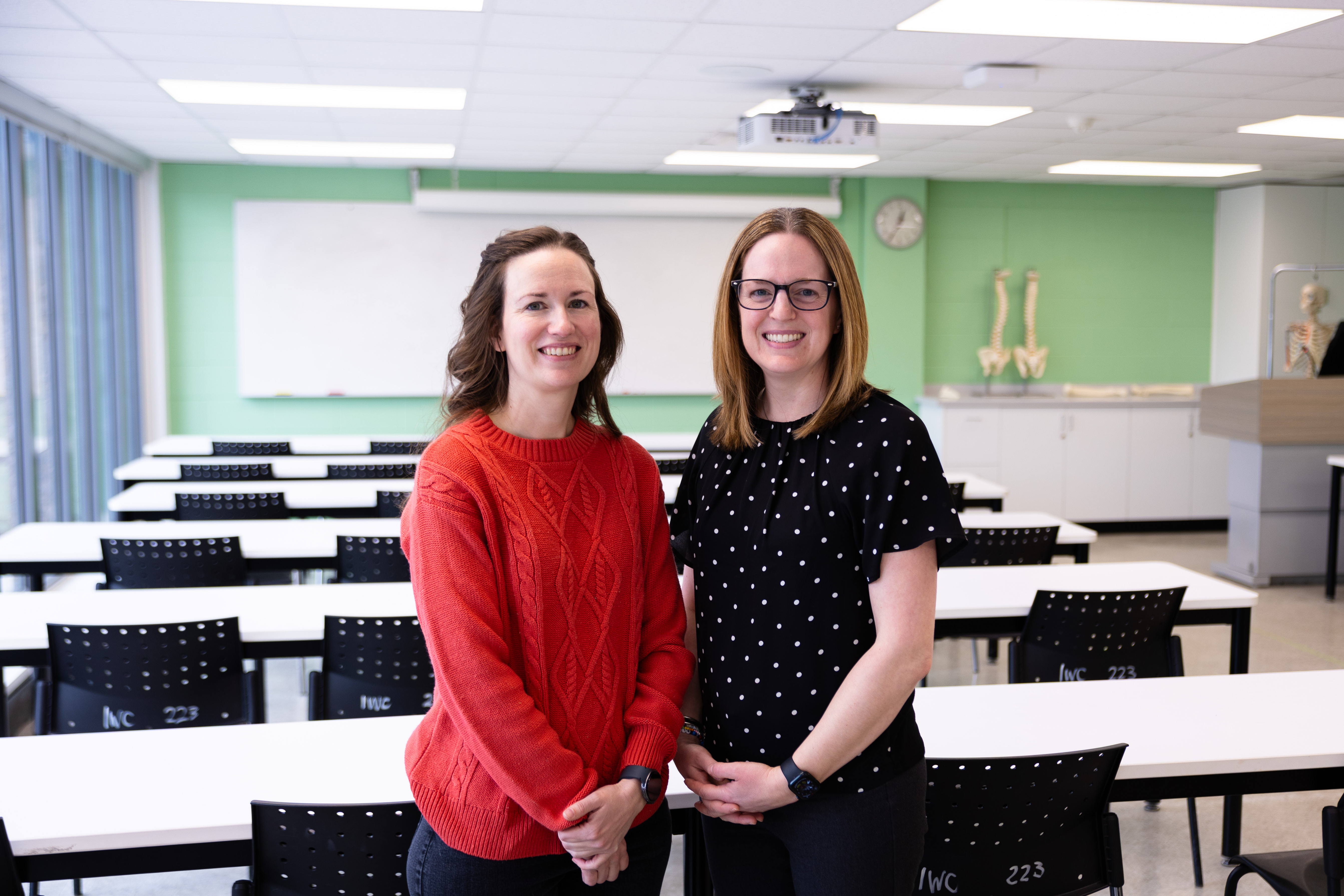
As health care grows more complex, McMaster University’s Integrated Rehabilitation and Humanities program is equipping students with the critical thinking skills needed for evidence-informed practice.
Run by the Faculty of Health Sciences, the new program brings together students from a range of disciplines to study the intersection of health, rehabilitation, and humanities. The program focuses on the art and science of health and well-being while helping students explore the deeper reasons behind patient care.
The Health Sciences Library began working with program leaders during early planning conversations, helping design research support to prepare students to navigate complex information environments and sort through disinformation.
“In health care, you need to be able to find information, evaluate it, and apply it to the context you’re working in,” said Stephanie Sanger, education and curriculum planning librarian at the Health Sciences Library. “If we can help these students build the skills now, we can set them up to become even better health care practitioners.”
Now in its second year, the program includes two introductory library sessions where students learn database searching, citation practices, and how to work with both health and social science literature. Students are also introduced to archival and primary source materials, expanding their exposure beyond traditional health databases.
Library workshops include interactive components where students actively build searches and learn through hands-on practice. The Health Sciences Library meets with program students twice in the fall term, with additional one-on-one support available as their research projects develop.
As access to online health information expands, students are increasingly expected to distinguish credible research from misleading sources.
Interest in the Integrated Rehabilitation and Humanities program continues to grow, with enrolment tripling since its inaugural year.
Anastasia Newman, physiotherapist and assistant professor in the program, says the library sessions have become foundational to how students approach research.
“I’m already seeing students look at the quality of evidence differently and use databases appropriately,” said Newman. “These library sessions are the North Star for research methods.”
Grounded in humanities coursework, the program encourages students to think more deeply about the patient experience.
“It draws another type of thinker, someone who thinks differently about health care and how we impact the community,” said Newman.
Learn more
To learn more, visit the Integrated Rehabilitation and Humanities program webpage.