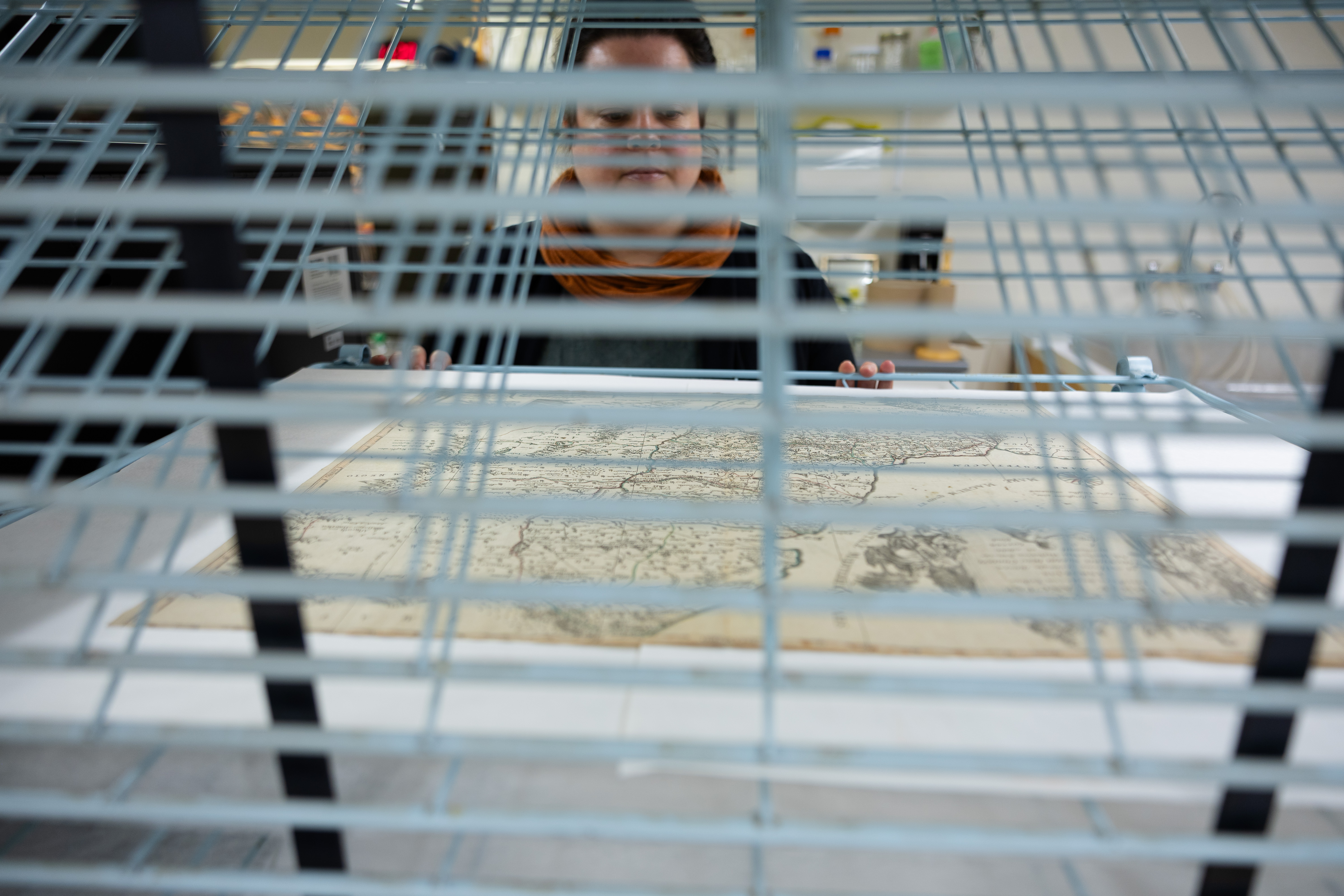
When Bronwen Glover meets people at a social event, she is usually asked what she does for a living.
When she replies that she’s a book conservator at McMaster University, her response is often met with great interest and a flurry of questions.
The truth is that Glover is both a scientist and an artist, working at one of only six Canadian post-secondary academic libraries with conservation experts. Her work brings together expertise in organic and inorganic chemistry with historical knowledge and the fine hand skills required to undertake delicate treatment work on rare and irreplaceable objects.
“Many people have never encountered books and documents that are this old,” said Glover. “They’re often very excited when they visit my lab and see the work I do and hear about the history of the material.”
The Conservation Lab is a bright, spacious room hidden behind the William Ready Division of Archives and Research Collections on the lower level of Mills Memorial Library.
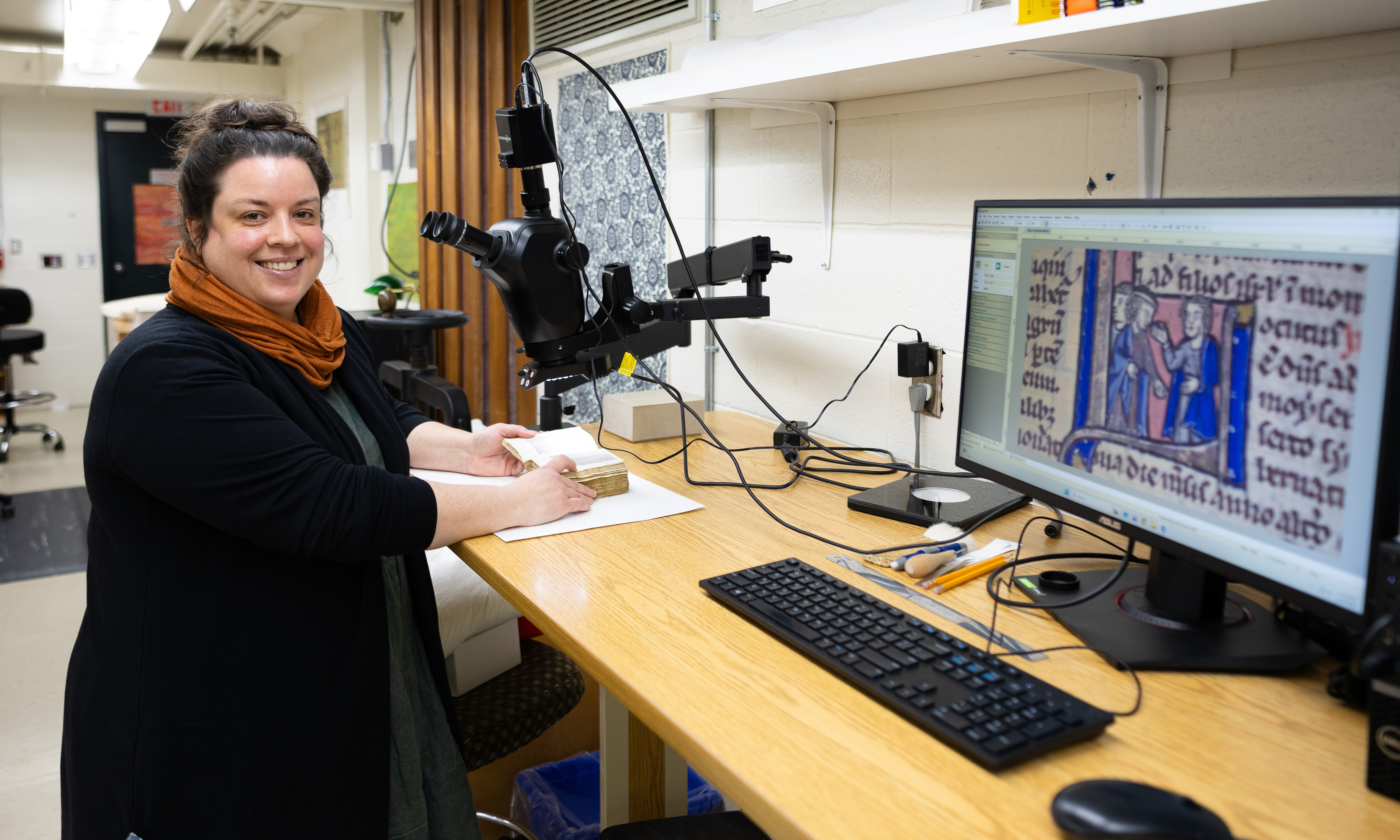
The lab features workbenches, beakers and solutions, a microscope, finishing tools, and book presses. There are sheets of gold leaf, rolls of leather and fabric, bottles of ink and oak galls, a sewing machine, and an iron.
Despite the volume of tools and materials, the space is tidy and immaculately organized, thanks to its caretaker. Among the list of items awaiting Glover’s care are rare books, maps, photographs, and manuscripts.
“A lot of what I’m working on is materials for teaching, research, or exhibition, but I have to be flexible for other tasks as they arise,” Glover said. “A side quest can arise at any moment.”
Glover recently finished a long-term project creating a historically informed binding for a medieval manuscript tentatively dated to the 1150s — a copy of the Consolatione by Boethius, a late Roman philosopher.
An upcoming project will focus on the conservation of the binding and pages of a miniature manuscript Bible dating to the 13th century.
“This will be a long process as I need to examine the object page by page under the microscope to see how the pigment is interacting with the parchment and if it needs consolidation,” she said.
Glover’s work begins with documentation, as nothing is changed without being photographed and profiled in a detailed treatment proposal. Things don’t always go according to plan so creative and unique approaches are needed, sometimes in consultation with her contemporaries across Canada and around the world.
Myron Groover, archives and rare book librarian, oversees Glover’s work at McMaster University Libraries. The pair works closely together to discuss conservation approaches and best courses of restoration.
“Bronwen is a remarkably skilled conservator who brings an ethos of care and creativity to everything she does — whether that’s re-binding a 500-year-old book using medieval materials and tools, mapping out a data-driven 20-year plan for the storage of our collections, or leading an interpretive visit for students,” said Groover. “It is a true privilege to work with her.”
Glover is also focused on training the next generation of professionals.
Sara Notdorft, a McMaster alumna, spent September to December 2025 working five days a week alongside Glover. The in-person internship marked the final requirement of her studies in the Cultural Heritage Conservation and Management Program at Fleming College.
Notdorft’s time in the lab focused on the conservation and storage of rare books and manuscripts. Her capstone project involved undertaking a full conservation treatment for a handwritten arithmetic book from the 1700s.
“Though I had not previously considered book conservation as my top interest, I developed a great love for it during my internship,” said Notdorft. “Bronwen was a fantastic mentor, and I couldn’t have asked for a better internship supervisor.”
Glover says it is a career highlight to work at McMaster.
“I can’t imagine working anywhere else right now,” she said.
Read the latest report from McMaster University Libraries
This story was originally published in the 2026 Impact Report. Read the McMaster University Libraries 2025-26 Impact Report accessible digital version. Complimentary print copies of the report are also available. Please email the libraries’ communications office to order your free copy.
Support McMaster University Libraries
Donate online to support McMaster University Libraries.
Photo Gallery
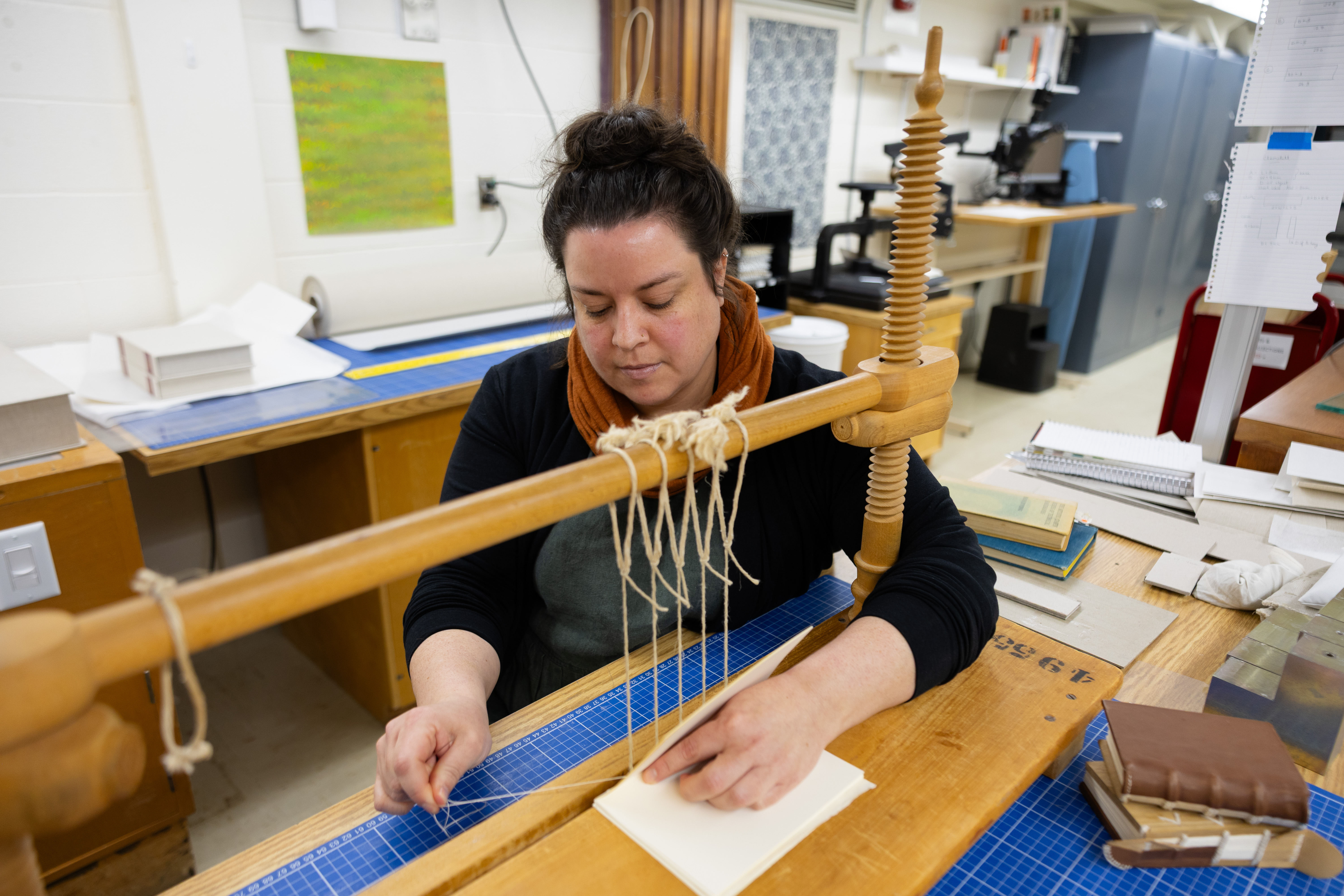
Sewing sections of a book
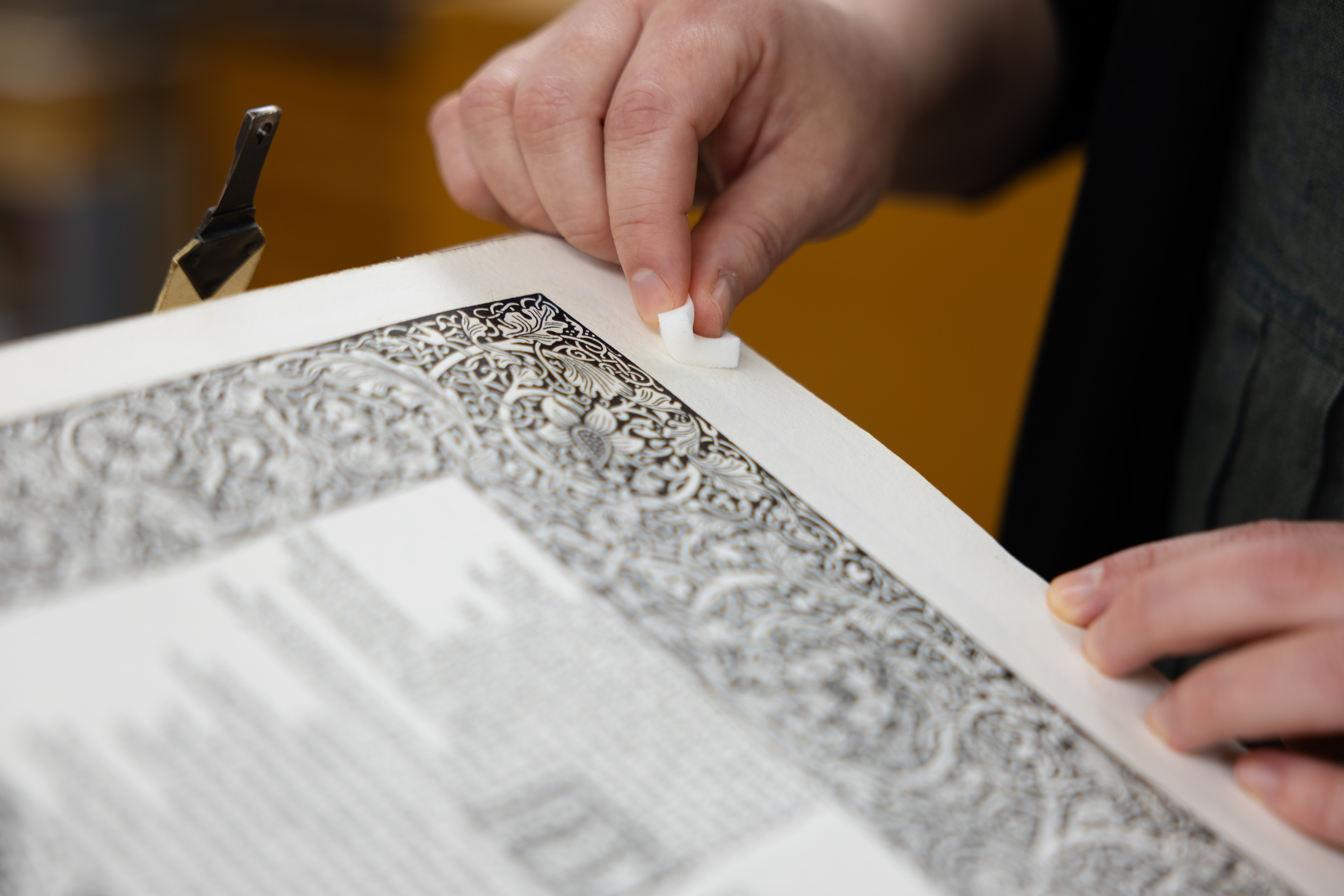
Cleaning pages of The Kelmscott Chaucer
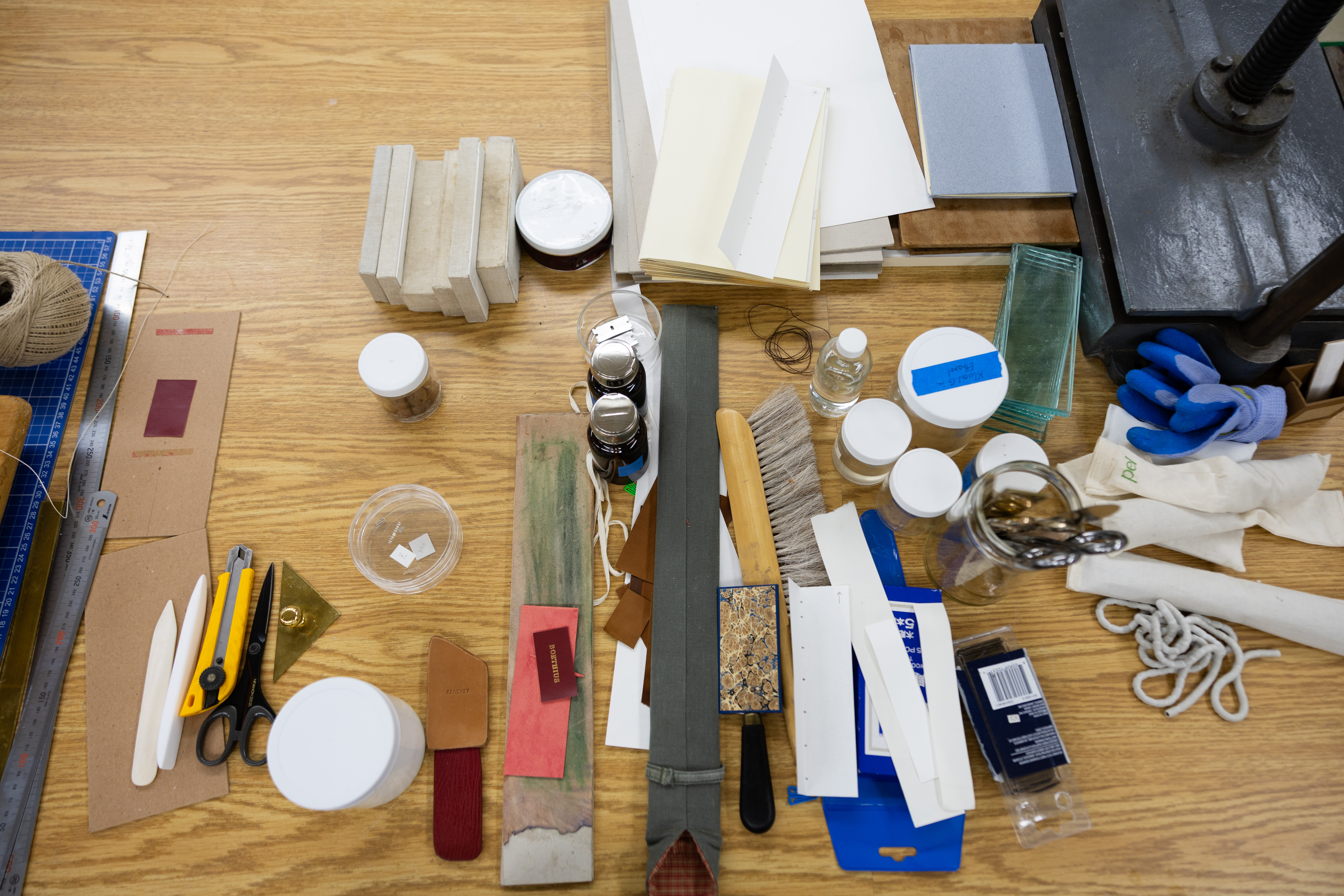
Tools of the trade in the Conservation Lab
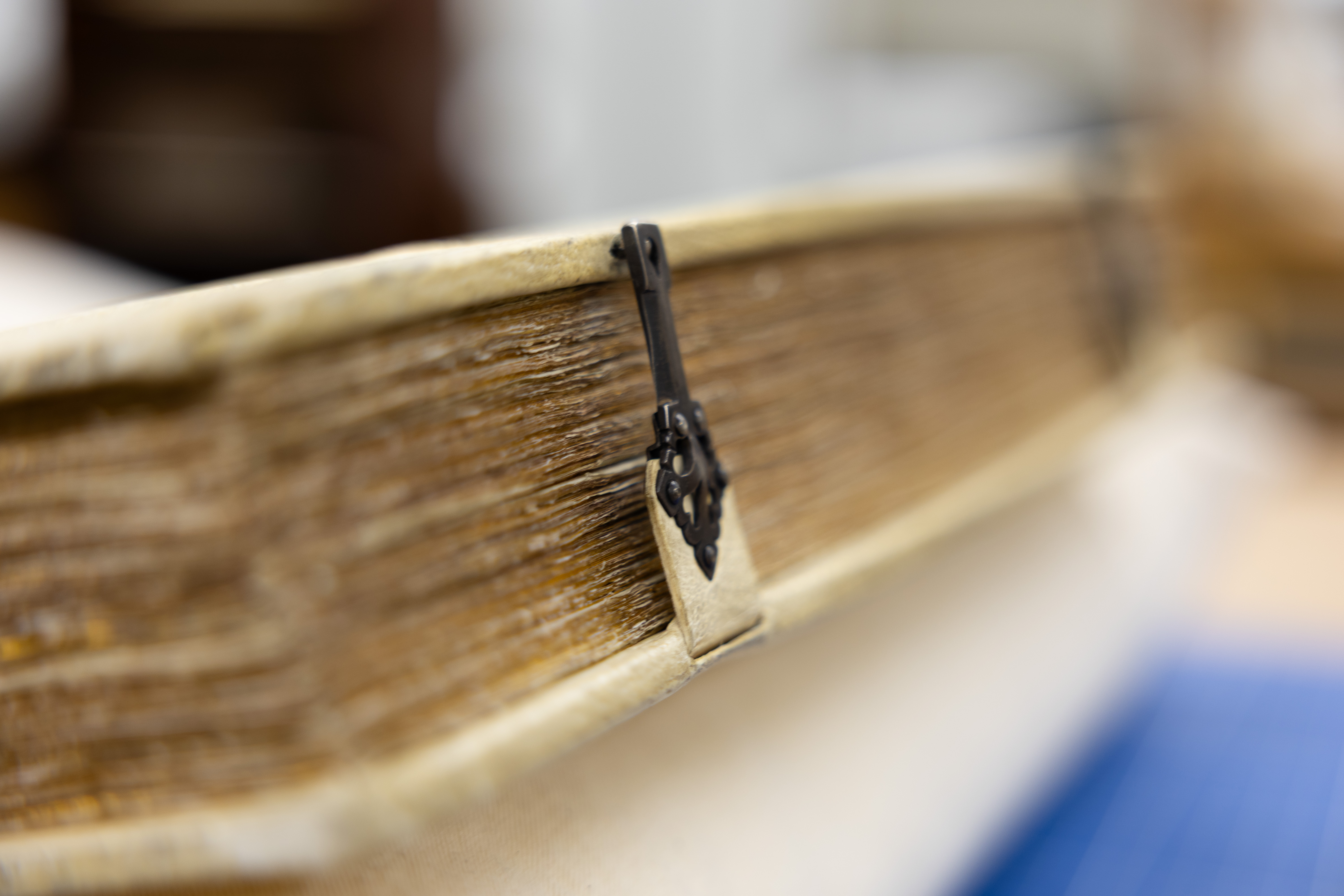
Clasps on a medieval inspired binding